
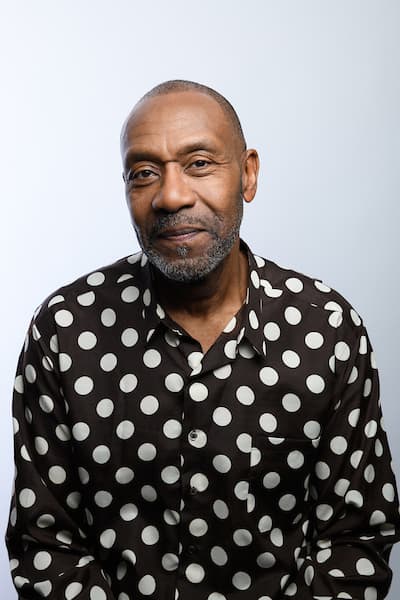
A leading Black British actor has revealed he believes the UK is ‘no better’ when it comes to racism than it was in the 1970s. We take an in-depth look at the changing face of the issue amid DEI controversy and the rise of the far right and ask are things really any different?
Rudolph Walker has been at the forefront of prime-time TV comedies and sitcoms for a staggering 55 years, including racial comedy Love Thy Neighbour, along with Doctor Who, The Thin Blue Line and EastEnders.
At 86, the celebrated Trinidadian British actor has witnessed the changing face of the creative industries during an illustrious career in television. Yet when asked if he thought things were better in the UK now when it comes to racism, he gave a resounding ‘no’.
“When you look back at those times, my gut feeling and honest answer is ‘no’,” pondered Rudolph. “It’s not just the UK, the world is one of greed with every man looking after himself.
“That feeds into the minorities and feeds into [other] things. If we take racism… we are all getting too greedy, every man for himself.”
It’s a surprising statement given that Rudolph began his career in the 1960s – a time before the law on racial discrimination was in place and the BBC’s idea of light entertainment saw white actors ‘blacking up’ to sing and dance in The Black and White Minstrel Show or Alf Garnett’s race hate rants in Til Death Do Us Part.
Rudolph was a 20-year-old aspiring actor when he immigrated to the UK from Trinidad and Tobago’s San Juan in 1960 and it wasn’t long before he landed TV roles including in the first episode of On The Buses.
Yet it was playing Bill Reynolds in a controversial comedy that would catapult Rudolph’s fame in the 1970s. Love Thy Neighbour highlighted cultural differences and mutual bigotry surrounding two couples - one Black and one White - living next to each other, but also friendship. While it’s a show that wouldn’t be made in current times with punch lines based on stereotypes, Rudolph has defended it as something that was a comedy of its time.
“I have to pay tribute to Love Thy Neighbour as I am here because of it,” Rudolph told Bibble. “There’s so many things it has given me.”
Thinking back to that era of racial tension against the Windrush generation and migrants from Commonwealth countries recruited to work in the NHS, Rudolph explained: “It’s not a coincidence that I was in a series called Love Thy Neighbour, but do we really love our neighbour today?
“I’m talking about the world. I stop and reflect on the title and if only we can use it as human beings. This is the way it should be.”
Playing Patrick Trueman in EastEnders since 2001, the role reignited Rudolph’s fame, but he says the highlight of his career was playing a barrister in 1980s drama Black Silk. That was something against type and the only British series ever made focusing on experiences of Black lawyers. Half of the episodes were written by Black or Asian writers.
Warning signs from America
Rudolph’s current concerns on society are echoed by much younger actors. Olivier Award-winner Adrian Lester, 57, from Birmingham, has warned of a change in sentiment heading over from America, where views have become starkly polarised.
“You only have to look across the water to our American cousins and what’s happening over there,” stressed Adrian, star of Trigger Point and Hustle. “They’ve lost their community and there’s a possibility that could happen here.
“You see the flags going up everywhere. People have lost their sense of community. We have to bring back togetherness.”
Black Country comedian Sir Lenny Henry has become a leading voice on racial inequality in the arts and media. He too is worried how racism in the UK, which he experienced over 40 years ago, is still an issue amid growing popularity of far right politics.
Partly in a nod to that, Sir Lenny has even called his current tour Still At Large, which comes to Birmingham’s The Alexandra on October 19. The 67-year-old was raised in Dudley and went on to do stand-up and TV shows at a time when people both behind the scenes and in the audience were openly prejudiced.
Impact of politicising ‘DEI’
Sir Lenny is anxious how Diversity, Equality and Inclusion has been reduced into the loaded term ‘DEI’, now used as a political football.
At his latest annual lecture for the Sir Lenny Henry Centre for Media Diversity, based at Birmingham City University(BCU) he hit out: “Words matter and sometimes when words disappear, justice disappears with them.
“Before it was DOI, it was Diversity – who is in the room, Equity – who has power – and Inclusion – who actually belongs.
“Each one of these are huge struggles in their own right and sometimes they need solutions. Suddenly, we’re not talking about prejudice anymore, but an acronym and that’s not an accident, that’s the weaponisation of language. Something Trump has been doing his entire second term.”
He added: “What’s happening globally should worry us all.
“Every time I speak to a Black or Brown person in this industry… I hear the same thing – ‘it’s happening here too’.
“Opportunities are narrowing, conversations are becoming more cautious, organisations stepping back, language being softened and issues being quietly parked. It doesn’t always look like a dramatic rollback, sometimes it looks like silence or hesitation.”
A 2026 study on journalists of colour in UK newsrooms, published by Sir Lenny Henry Centre for Media Diversity and led by ITV News Global Security Editor Rohit Kachroo and Dr Ellie Tomsett, found 63% said they’d experienced racism in the workplace and 70% reported insufficient opportunities for career progression.
"They tell us DEI has gone too far but the problem isn't DEI,” said Sir Lenny. “The problem is racism. The problem is sexism. The problem is ableism. The problem is homophobia. The problem is power.”
Sir Lenny urged everyone to call out racism, sexism and more when they see it: “We must speak truth to power when that power is prejudiced, bigoted, narrow-minded – together we can do this because individually, we will be picked off.”
Change but not enough
Academic Dr Fran Pheasant-Kelly at University of Wolverhampton explained that the past 30 years had seen breakthroughs but acknowleged that inequality issues over race “still persist”.
“Things are much better in terms of legislation and guidelines to deal with discrimination,” explained Fran, Co-Director at the university’s International Centre for Creative Industries and Critical Cultural Practices.
“I worked in the NHS in the 1990s and had a colleague who was openly racist and no one did anything, but that person would be sacked now.”
Fran highlighted progressive TV programmes like ER and Strictly Come Dancing, which have helped steer change, employing actors and contestants of colour and with disabilities.
“I don’t think a programme like Love Thy Neighbour would or could be made now, so there’s undoubtedly been progress,” said Fran. “Strictly Come Dancing epitomises the advances because it is so embracing of other identities. That helps it be successful. The fact it is acceptable shows how people are open to that.
“Then there’s superhero movie Black Panther that had a Black male protagonist, but those films are still few and far between.
“Inequality does still persist including a gender bias. We’re getting there and, in some areas, quicker than others, but it’s not helped by the politicisation of race.
“It’s still an uneven playground although legislation is in place. We still have a long way to go.”