
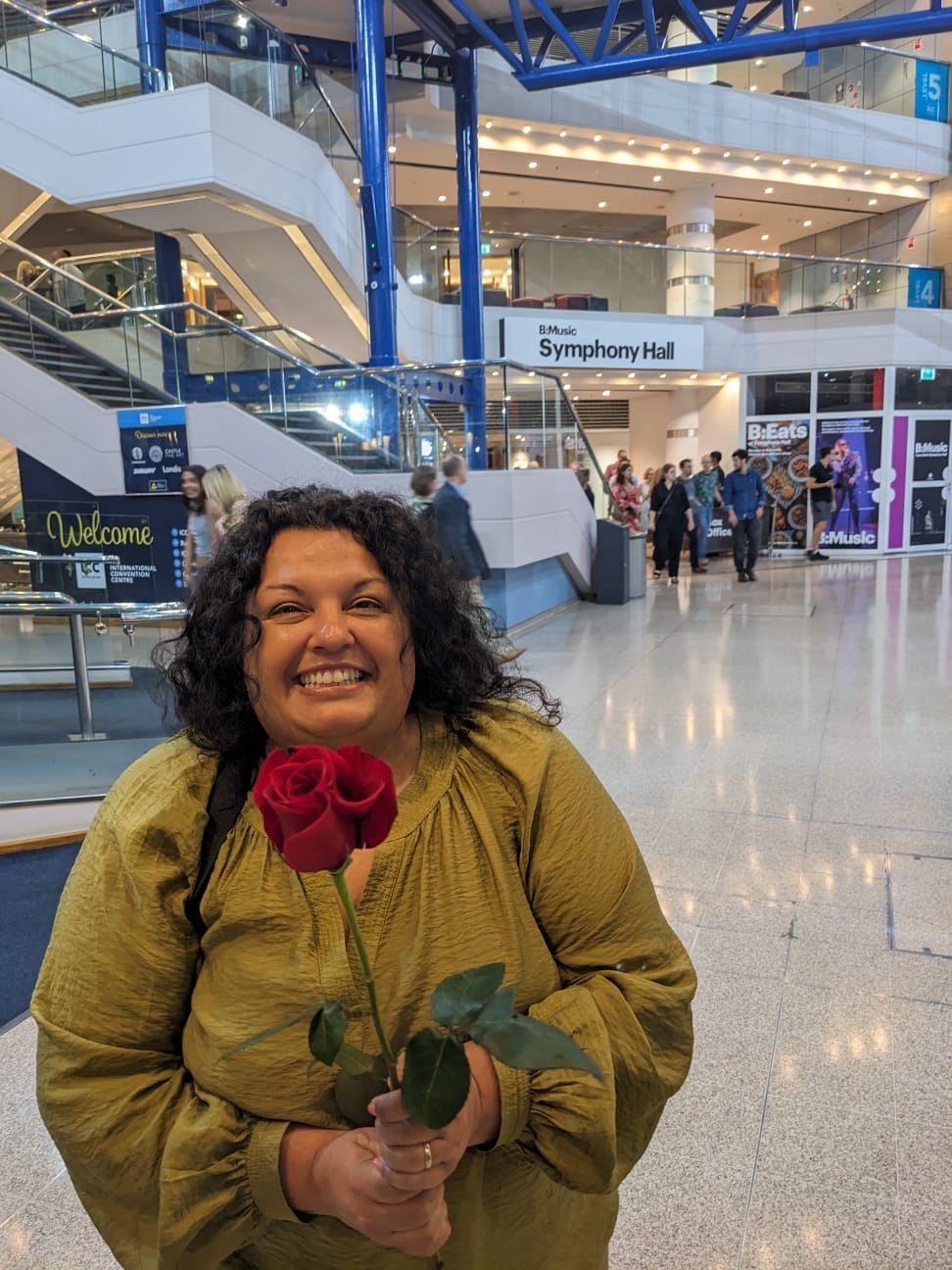
Q&A with our writer Alison Brinkworth.
As a journalist from the Black Country, I know only too well how enriched this region is with fascinating, creative people and talent. I’ve spent 30 years writing professionally but it’s always been the interviews and reviews for theatre, culture and the arts that has brought me the most joy, and hopefully that is passed on to you through my work at Bibble.
What matters most about the arts to you?
I think it’s vital that everyone has access to arts and culture from as young as possible. The value of things like music, theatre, exhibitions and writing are enormous to society with lasting benefits to mental health, community and education. It is also an important British industry that contributes significantly to the economy, not just about entertainment. It’s sad to see how the arts are so often underestimated and underfunded, particularly in schools. We’re lucky in the Midlands that there is so much available to see and do for free or at a reasonable price. Theatre tickets and local concerts are a fraction of the price for the equivalent in London.
What’s a book that stopped you in your tracks?
Before I started reading Cloud Atlas by renowned Midlands writer David Mitchell, a colleague said they were excited for me to be going into it fresh. I gorged on it and realised what they meant. It’s an epic, imaginative sci-fi tale that sweeps you away and how David comes up with his ingenious ideas is inspiring. He’s got fans including Stephen King and his novels, like The Bone Clocks, are always beautifully written and inventive. Another writer in the same vein is Emily St. John Mandel if you enjoy dystopian fiction.
Have you ever been starstruck when interviewing someone?
I don’t tend to get starstruck as I need to keep a level head for work. During my career covering news and lifestyle, I’ve been lucky enough to interview world-renowned figures from David Attenborough to Ozzy Osbourne, Will Smith, Frank Skinner and Sting, to name a few. However, as a teenager I was a Wet Wet Wet fan, so when Marti Pellow sang Elvis Costello’s song Alison to me mid-interview, I did falter for a moment. I also had another wobble when handed a red rose by Bill Murray during his gig at Birmingham Symphony Hall.
What’s exciting and unique about creative work right now in the Black Country and wider West Midlands?
I’ve noticed a growing self-confidence in the region, with creators not afraid to put their own local flavour into their work. The success of Peaky Blinders showed how it’s good to lean into regional stories and accents. It’s good to see new theatre productions being made from scratch across the Midlands and a burgeoning film and TV industry backed by leading players from Steven Knight to Adrian Lester and Joe Lycett. I could see the Midlands becoming a major centre and employer for TV and film quite soon, with new studios in Digbeth and popular filming locations in the Black Country. Anyone interested in that industry should make sure they are connected to Reel Brum.